



Engineering Optical Emission Spectrometers for Industrial Accuracy
Optical Emission Spectroscopy (OES) plays a critical role in modern metal industries where precise elemental analysis is essential for quality control, process optimization, and compliance with international standards. Engineering a reliable OES system requires a careful balance of optical design, electronics, excitation sources, and software algorithms.
At VAS Spectrometers, the engineering approach focuses on delivering consistent accuracy under real industrial conditions. This includes robust hardware architecture, optimized spark excitation systems, and stable optical paths that ensure repeatable results even in high-throughput environments.
One of the key challenges in spectrometer design is maintaining accuracy across a wide range of alloy compositions. Advanced optical layouts combined with high-resolution detectors enable the detection of trace elements such as Nitrogen, Sodium, and Lithium, which are critical in steel and aluminum production.
Equally important is long-term stability. Industrial spectrometers must deliver reliable performance over years of operation. This is achieved through controlled thermal design, durable components, and calibration strategies based on certified reference materials.
Engineering for Real Industrial Environments
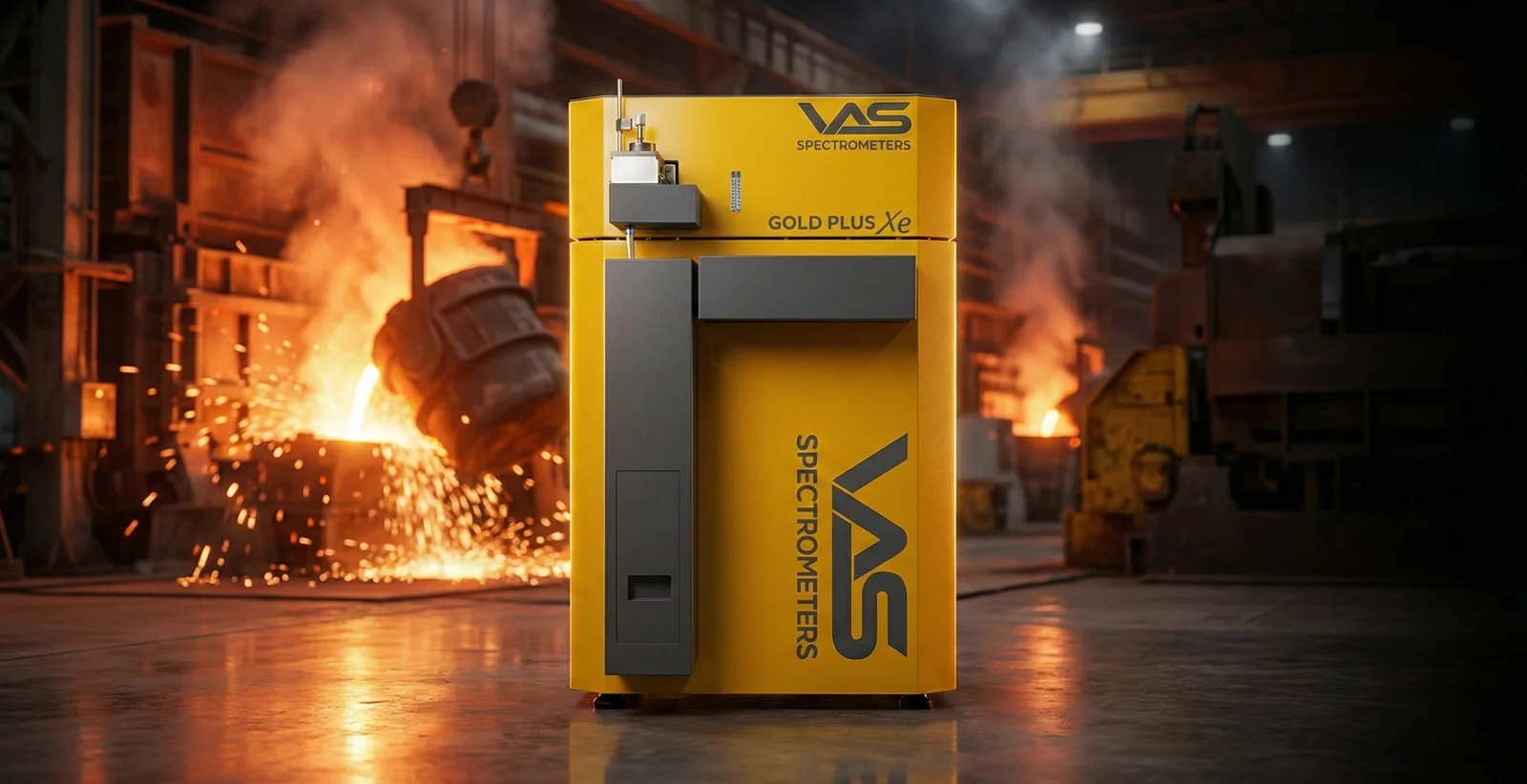
Unlike laboratory instruments, industrial OES systems must perform consistently on the shop floor. Factors such as temperature variations, dust, vibration, and operator handling are addressed through rugged enclosure design, stable excitation sources, and user-friendly operation.
Optical Emission Spectroscopy (OES) plays a critical role in modern metal industries where precise elemental analysis is essential for quality control, process optimization, and compliance with international standards. Engineering a reliable OES system requires a careful balance of optical design, electronics, excitation sources, and software algorithms.
At VAS Spectrometers, the engineering approach focuses on delivering consistent accuracy under real industrial conditions. This includes robust hardware architecture, optimized spark excitation systems, and stable optical paths that ensure repeatable results even in high-throughput environments.
One of the key challenges in spectrometer design is maintaining accuracy across a wide range of alloy compositions. Advanced optical layouts combined with high-resolution detectors enable the detection of trace elements such as Nitrogen, Sodium, and Lithium, which are critical in steel and aluminum production.
Equally important is long-term stability. Industrial spectrometers must deliver reliable performance over years of operation. This is achieved through controlled thermal design, durable components, and calibration strategies based on certified reference materials.
Engineering for Real Industrial Environments
Unlike laboratory instruments, industrial OES systems must perform consistently on the shop floor. Factors such as temperature variations, dust, vibration, and operator handling are addressed through rugged enclosure design, stable excitation sources, and user-friendly operation.
Optical Emission Spectroscopy (OES) plays a critical role in modern metal industries where precise elemental analysis is essential for quality control, process optimization, and compliance with international standards. Engineering a reliable OES system requires a careful balance of optical design, electronics, excitation sources, and software algorithms.
At VAS Spectrometers, the engineering approach focuses on delivering consistent accuracy under real industrial conditions. This includes robust hardware architecture, optimized spark excitation systems, and stable optical paths that ensure repeatable results even in high-throughput environments.
One of the key challenges in spectrometer design is maintaining accuracy across a wide range of alloy compositions. Advanced optical layouts combined with high-resolution detectors enable the detection of trace elements such as Nitrogen, Sodium, and Lithium, which are critical in steel and aluminum production.
Equally important is long-term stability. Industrial spectrometers must deliver reliable performance over years of operation. This is achieved through controlled thermal design, durable components, and calibration strategies based on certified reference materials.
Engineering for Real Industrial Environments
Unlike laboratory instruments, industrial OES systems must perform consistently on the shop floor. Factors such as temperature variations, dust, vibration, and operator handling are addressed through rugged enclosure design, stable excitation sources, and user-friendly operation.